Board Certified DUI Defense
Utah's .05 BAC Law
Since 1998Board CertifiedNCDD Faculty
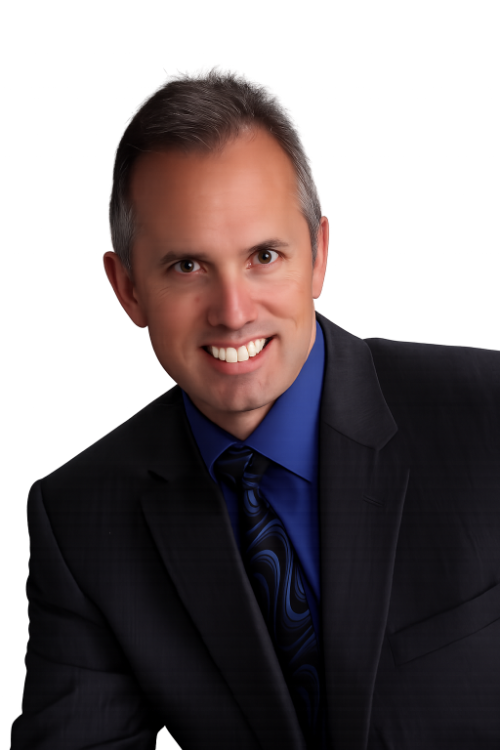
Utah sets its per se DUI limit at .05, the lowest of any state in the country. Every other state uses .08. The rule took effect December 30, 2018, and a blood or breath alcohol concentration that is perfectly legal everywhere else in the United States can produce a DUI arrest, conviction, and permanent criminal record here. This page explains what the .05 threshold actually covers, the three ways Utah charges a DUI, why the accuracy of the chemical test carries more weight at .05 than at any higher limit, and how the defense is built around that.
The margin between legal and illegal has been cut nearly in half, which puts enormous weight on the reliability of the breath or blood evidence. At .05, the instrument's own margin of error can approach the entire difference between guilt and innocence. Glen Neeley's training in breath testing science, including the Borkenstein Course on alcohol and highway safety and Intoxilyzer operation, is directly relevant to cases at this threshold, where a conviction and an acquittal often turn on the precision of the instrument and the conditions under which the test was administered.
Utah's .05 Limit and the Other Numbers That Matter
The .05 per se limit applies to drivers 21 and over, and it gets most of the attention, but it is not the only BAC number in Utah law. Understanding where your reading falls on this scale is the starting point for knowing what you are actually charged with.
| Threshold | Who or what it applies to | Governing rule |
|---|---|---|
| .05 or higher | Drivers 21 and over (adult per se limit) | Utah Code 41-6a-502 |
| .04 or higher | Commercial license holders operating a commercial vehicle | Federal CDL standard |
| Any measurable amount | Drivers under 21 (zero tolerance, no impairment needed) | Utah Code 53-3-231 and 32B-4-409 |
| .16 or higher | Extreme DUI (raises the jail minimum and adds interdicted-person status) | Utah Code 41-6a-501(1)(f) |
A reading of .16 or higher is an extreme DUI under Utah Code 41-6a-501(1)(f). Extreme status raises the mandatory jail minimum for a first offense to five days (or two days plus thirty days of home confinement), and since January 1, 2026 it carries a mandatory interdicted-person designation that marks the driver's license NO ALCOHOL SALE. Being an interdicted person does not change the offense classification, but it is a lasting consequence that a high reading now triggers by law.
The .04 line applies only to commercial driver's license holders operating a commercial vehicle, and the zero-tolerance rule reaches drivers under 21 with any measurable amount of alcohol, no impairment required. Whatever the number, a conviction under Utah Code 41-6a-502 triggers the full DUI penalty structure: mandatory minimum jail or compensatory service, license suspension, ignition interlock, fines, and a permanent record.
One detail people miss: Utah Code 41-6a-502 makes it unlawful to operate a vehicle while under the influence, not a motor vehicle. Utah defines a bicycle as a wheeled vehicle that includes an electric assisted bicycle, so the .05 threshold reaches bicycles and e-bikes as well as cars.
The Three Ways Utah Charges a DUI
Utah Code 41-6a-502(1) sets out three separate prongs, and the prosecution may pursue more than one at a time. Which prong applies to your case determines the defense.
- Sufficient alcohol, measured at the time of the test. It is unlawful to operate with sufficient alcohol in the body that a later chemical test shows a blood or breath alcohol concentration of .05 or greater at the time of the test. This prong measures the reading at the time of testing, not at the moment of driving.
- Incapable of safe operation. It is unlawful to operate while under the influence of alcohol, any drug, or the combined influence of alcohol and any drug to a degree that renders the driver incapable of safely operating a vehicle. No specific number is required, and the standard is incapability of safe operation, not merely being somewhat affected.
- A .05 result at the time of operation. It is unlawful to operate with a blood or breath alcohol concentration of .05 or greater at the time of driving or actual physical control.
Under the two per se prongs, the State does not have to prove you were actually impaired. The number alone is sufficient, regardless of how well you were driving, how clearly you spoke, or how you performed on field sobriety tests. Under the impairment prong, by contrast, a person can be convicted below .05 if the State proves incapability of safe operation. Impairment from any drug is charged the same way, and Utah Code 41-6a-517 separately reaches driving with any measurable controlled substance or metabolite in the body, a drug-based DUI that is subject to statutory affirmative defenses including a valid prescription.
There is an important corollary at a reading of .06 or .07. Showing that you drove well and appeared unimpaired does not by itself win the case, because the per se prongs do not turn on impairment. Defeating a per se charge means defeating the test result: its accuracy, its foundation, or its admissibility.
Why .05 Makes Test Accuracy Decisive
At .08, a breath instrument's inherent margin of error, commonly cited at plus or minus .005 to .01, is less likely to change the outcome. A reading of .09 leaves room for error and still exceeds the limit. At .05, that same margin becomes case-determinative. A true concentration of .04 could register as .05 through instrument imprecision alone. This is not speculation; breath testing instruments have documented uncertainty ranges that forensic toxicologists and manufacturers acknowledge.
Several factors beyond raw instrument precision affect readings near the threshold:
- Mouth alcohol contamination. Recent belching, acid reflux or GERD, alcohol trapped in dental work, or certain medications can introduce mouth alcohol that inflates the reading without reflecting blood alcohol content.
- Observation period violations. Officers must observe the subject for a set period, typically 15 minutes, before testing, to rule out mouth alcohol. An incomplete or interrupted observation period undermines the result.
- Calibration and maintenance. The instrument must be calibrated on schedule using reference solutions of known concentration. Missed calibrations, out-of-tolerance results, or gaps in the maintenance records all undercut confidence in the reading.
- Physiological variables. Body temperature, breathing pattern, hematocrit, and whether the subject is in the absorptive or post-absorptive phase all affect the breath-to-blood ratio the instrument assumes.
- Radio frequency interference. Police radios and other RF sources can affect instrument readings under certain conditions.
Glen Neeley's training includes the Borkenstein Course, the standard in forensic alcohol testing education, along with instrument-specific certification. He requests the calibration logs, maintenance records, and operator certifications in every case and reviews them for the irregularities that general-practice attorneys do not know to look for.
Defense Strategies at the .05 Threshold
Attacking the Test Result
When the reading falls between .05 and .07, the defense concentrates on whether the instrument produced an accurate result. Every source of potential error is examined: mouth alcohol, calibration status, observation period compliance, and physiological factors. If the defense can establish that the true concentration may have been below .05, the per se case fails.
Rising Blood Alcohol
Alcohol takes time to absorb. If you drank shortly before driving and were tested 30 to 60 minutes later, your concentration at the time of testing may have been higher than while you were behind the wheel. Utah's statute complicates this defense, and it is worth understanding why rather than assuming the argument wins. Because the first prong reaches a person who had sufficient alcohol in the body such that a later test shows .05 or greater at the time of the test, the State can proceed on the reading itself.
Where rising blood alcohol retains real force is against the time-of-operation prong, and in contesting whether the evidence establishes sufficient alcohol in the body at the time of driving. Those questions turn on the drinking timeline, absorption rate, and the interval between the stop and the test, and presenting the argument effectively usually requires expert analysis rather than argument alone.
Challenging the Stop and Arrest
If the stop lacked reasonable suspicion, or the arrest lacked probable cause, the chemical test result may be suppressed regardless of the number. This constitutional defense applies with full force at .05, and where it succeeds, it resolves the per se and impairment theories together. It usually starts with a close look at what happened during the stop and arrest.
Contesting the Impairment Theory
Where the State pursues the impairment prong, the standard is incapability of safely operating a vehicle. Dashcam and body camera footage frequently shows normal driving, clear speech, and steady balance that is difficult to reconcile with that standard.
How the .05 Limit Reaches Out-of-State Visitors
Utah's limit catches out-of-state visitors by surprise. Someone used to .08 may have a glass of wine with dinner and drive believing they are well within the law. The .05 threshold applies to every driver on Utah roads regardless of where the license was issued, which matters at ski resorts, national parks, and conference destinations where dining and drinking are part of the trip.
It also follows you onto federal land within the state. In Utah's national parks, 36 CFR 4.23 sets the limit at 0.08 but provides that a more restrictive state limit supersedes it, so .05 controls there as well. On other federal property, the Assimilative Crimes Act imports Utah Code 41-6a-502 with its .05 threshold.
How the Threshold Reshaped Plea Negotiations
The lower limit has changed negotiation. Before .05, a reading of .06 or .07 was under the legal limit and often produced a dismissal or a minor traffic disposition. Those same readings now carry the full DUI penalty structure. The result is a much larger pool of cases sitting close to the line, which makes the measurement uncertainty argument more relevant to negotiation than it ever was at .08. When calibration data, maintenance records, and expert analysis show that the instrument's documented uncertainty range overlaps the legal limit, prosecutors weigh trial risk differently than they would in a high-BAC case.
The threshold also affects the reduction calculus. A resolution as impaired driving under Utah Code 41-6a-502.5 avoids the license suspension and ignition interlock consequences that attach to a Section 41-6a-502 conviction.
| Consequence | DUI under 41-6a-502 | Impaired driving under 41-6a-502.5 |
|---|---|---|
| License suspension | Applies | Avoided |
| Ignition interlock | Required | Avoided |
| Expungement waiting period | Ten years | Ten years |
With more cases sitting in the borderline range since 2018, that distinction matters to more defendants than it did before the change. Whether a reduction is realistic depends on the strength of the evidence, the reading, and what the defense can show during negotiation.
Utah .05 BAC Questions
Is Utah really the only state with a .05 limit?
Yes. Utah remains the only state enforcing a .05 per se limit; all others use .08. Several states, including Washington and Illinois, have considered similar legislation, and the National Transportation Safety Board has recommended a nationwide .05 standard, but none has enacted it.
Can I be charged with a DUI below .05?
Yes. The impairment prong requires no specific number. If the State proves you were under the influence to a degree that rendered you incapable of safely operating a vehicle, you can be convicted at any concentration.
If I blew .06 but was driving fine, does that help?
It helps on the impairment theory but does not by itself defeat a per se charge, because the per se prongs do not require proof of impairment. At that reading the defense focuses on the reliability and admissibility of the test result: calibration, observation period, mouth alcohol, and foundation.
Does the .05 limit apply to prescription medications?
The .05 per se threshold applies to alcohol. Utah's DUI law separately covers impairment from any substance, including prescription medication, and Utah Code 41-6a-517 reaches driving with any measurable controlled substance or metabolite in the body, subject to statutory affirmative defenses including a valid prescription.
How many drinks does it take to reach .05?
It varies with body weight, sex, food, metabolism, and the size and type of drinks. As a rough guide, many adults reach .05 after two standard drinks within an hour, and smaller individuals after one. Individual variation is significant, and no rule of thumb is reliable enough to drive on.
Does .05 apply on federal land in Utah?
Yes. In the national parks, 36 CFR 4.23 sets the limit at 0.08 but provides that a more restrictive state limit supersedes it. On other federal property, the Assimilative Crimes Act imports Utah Code 41-6a-502 with its .05 threshold.
Talk to Glen Neeley About Your Case
Utah's .05 limit demands a defense attorney who understands breath testing science at a technical level. Call for a free, confidential consultation about your reading, your test, and your options.