Board Certified DUI Defense
DUI Defense Attorney in Provo, Utah
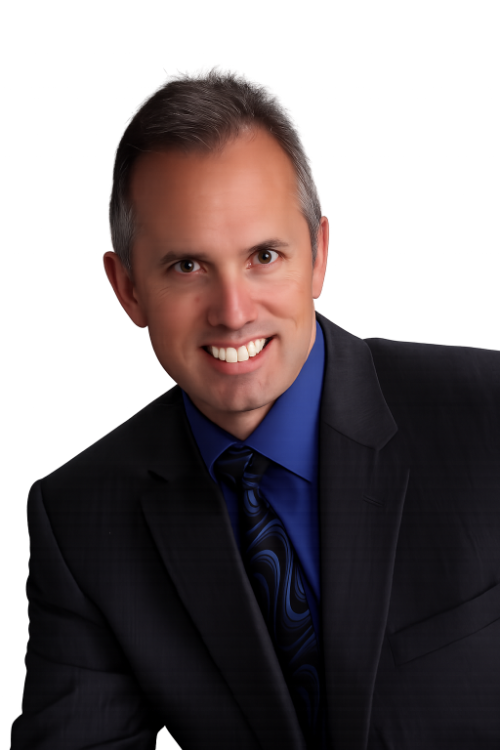
A Provo DUI arrest is really two problems that begin in the same instant. One is a criminal charge, filed in the Provo City Justice Court when the case is a misdemeanor and in the Fourth District Court (Utah County) when the facts make it a felony. The other is an administrative action at the Utah Driver License Division, which decides whether you keep your license and moves on a schedule of its own, even when the criminal charge is later reduced or dropped. Glen Neeley defends DUI in Provo and across Utah County, and he has handled nothing but DUI defense since 1998. He is Board Certified in DUI Defense and serves on the faculty of the National College for DUI Defense.
Board Certified DUI Defense | Since 1998 | Serving Provo
Since 1998Board CertifiedNCDD Faculty
Who Needs a DUI Defense Attorney in Provo
Provo is the seat of Utah County and the busiest city in the valley, with University Avenue and I-15 carrying steady traffic past Brigham Young University while US-189 climbs east into Provo Canyon toward the reservoirs and resorts above town. Those roads see heavy weekend and late-night use, and Utah's DUI line sits low enough to catch drivers who feel fine. The state can charge a DUI at a blood or breath alcohol concentration of .05, one of the lowest per se limits in the country, and it does not need a crash or weaving traffic to make the case stick. A prosecutor can also proceed with no number at all by arguing you could not safely operate the vehicle, which puts the officer's observations, not just a test result, at the center of the fight.
The part that catches people off guard is the license clock running quietly in the background. From the date of the arrest you have ten calendar days to ask the Driver License Division for a hearing, and if no one makes that request, the suspension takes effect on the 60th day after the arrest with no further warning. That administrative timeline runs on its own, separate from any first appearance in the Provo City Justice Court, so a driver who waits to see what the criminal case will do can forfeit the license challenge by simple inaction. The first week and a half after an arrest is when the most important early move gets made or missed.
Glen Neeley has limited his practice to DUI defense since 1998, and that focus shows in how he reads a file. Board certification in DUI defense is earned through trial work and examination rather than advertising, which means the breath and blood science that decides these cases is his daily work instead of a sideline. He handles Provo cases himself, from the license hearing through negotiation or trial, and he knows how Utah County prosecutors and the Fourth District Court judges tend to approach DUI matters. That familiarity lets him give a client a straight read on where a particular case is likely to go rather than a generic forecast.
How Glen Neeley Builds a DUI Defense in Provo
A DUI defense begins with the reason for the stop. An officer must have a lawful, specific basis to pull a car over on I-15, US-189, or University Avenue, whether that is an observed traffic violation, a checkpoint, or genuine signs of impaired driving. Glen pulls the dispatch logs, the body-worn and dashboard video, and the written report to test whether that basis actually existed. When a stop cannot be justified, everything the officer gathered afterward becomes vulnerable to a motion to suppress, and a granted motion can end a case well before a jury ever hears about a test result.
Field sobriety tests come next. The walk-and-turn, one-leg stand, and horizontal gaze nystagmus tests carry standardized instructions and scoring, and they are easy to fail for reasons that have nothing to do with alcohol: a sloping shoulder off University Avenue, cold canyon air on a US-189 stop, an old injury, or plain nerves. Glen checks whether each test was given and graded the way the manuals require. Chemical results get the same treatment, and at a .05 threshold the margin for error is thin. An Intoxilyzer 9000 that missed a calibration, a skipped observation period before the breath sample, a rising-alcohol curve, or a gap in the chain of custody on a blood draw can each move a reading across the line.
From there the case moves into the correct forum, and in Provo that turns entirely on the charge level. A misdemeanor DUI is prosecuted in the Provo City Justice Court, while a felony DUI is filed in the Fourth District Court for Utah County, whose courthouse sits in Provo itself. Glen has appeared across Utah County for decades and knows how its prosecutors build and value these cases. He uses that experience to decide whether a given file should be pushed to a suppression hearing, positioned for trial, or resolved through negotiation when the evidence supports a better outcome than the charge on paper.
Provo DUI Penalties
Utah writes each DUI penalty as an either-or minimum rather than a single fixed sentence, and the level climbs with every prior inside a ten-year window. Because the offense starts at a .05 concentration, a Provo charge can grow out of less alcohol than a driver expects. A first offense is a class B misdemeanor: either 2 days in jail or 48 hours of compensatory service, a fine of $700 plus the state surcharge, a 120-day license suspension, and an 18-month ignition interlock requirement. A breath or blood result of .16 or higher raises the jail exposure to five days, or two days paired with 30 days of home confinement, but it does not push the case to a higher offense level. A second DUI within ten years becomes a class A misdemeanor, carrying 10 days in jail or five days plus 30 days of home confinement, an $800 fine, and a two-year interlock. A third DUI within ten years, or any DUI after a prior felony DUI, is a third-degree felony punishable by zero to five years in prison, which a court may reduce to a minimum of 60 days in jail with a $1,500 fine.
| Offense | Jail (either / or) | Fine | License | Interlock |
|---|---|---|---|---|
| First DUI (.05-.159 BAC) | 2 days, or 48 hours compensatory service | $700 minimum plus surcharges | 120 days | 18 months |
| First Extreme DUI (.16+ BAC) | 5 days, or 2 days plus 30 days home confinement | $700 minimum plus surcharges | 120 days | 18 months |
| Second DUI (within 10 years) | 10 days, or 5 days plus 30 days home confinement | $800 minimum plus surcharges | 2 years | 2 years |
| Second Extreme DUI (within 10 years) | 20 days, or 10 days plus 60 days home confinement, or 10 days plus treatment | $800 minimum plus surcharges | 2 years | 2 years |
| Felony DUI (third-degree) | 0 to 5 years prison; 60-day jail minimum on probation | Up to $5,000; $1,500 minimum on probation | 2 years | 3 years |
| Felony Extreme DUI (third-degree) | 0 to 5 years prison; 120-day jail minimum on probation | Up to $5,000; $1,500 minimum on probation | 2 years | 3 years |
| DUI with injury | Varies - felony possible | Varies | Varies | Varies |
Extreme DUI means a blood or breath alcohol level of .16 or higher, alcohol at .05 or higher combined with a measurable controlled substance, or two or more non-prescribed controlled substances. It raises the mandatory jail minimum shown above but does not change the offense level.
The number a judge reads at sentencing is only part of what a conviction costs. The criminal sentence, the license suspension, and the interlock requirement each run under separate rules and then overlap, so a single arrest can mean jail or service, a fine, months of restricted driving, and a device in the car long after the courtroom part is finished. Insurance rates usually jump. A commercial driver faces a one-year disqualification from a first conviction in any vehicle, personal car included, and that hit is not undone by an interlock election or a later expungement. Professional licensing boards may ask about the result, non-citizens can face immigration consequences, and a felony brings firearm restrictions that a later reduction does not automatically reverse. For most people, how these pieces stack in daily life matters more than the headline fine.
DUI Defense in Provo and Utah County
DUI enforcement in Provo comes from several directions at once. The Provo Police Department patrols city streets, the university district around Brigham Young University, and the arterials feeding onto I-15, while the Utah County Sheriff covers the unincorporated stretches nearby and the Utah Highway Patrol works the freeway and the US-189 canyon route. Weekend and holiday nights draw extra attention on University Avenue and along the Provo Canyon corridor, where recreation traffic mixes with commuters heading home. Glen defends drivers stopped anywhere in the city and throughout the surrounding Utah County communities, including the neighbors just up and down the valley in Orem and Springville.
Which court hears the case turns on how it is charged. A misdemeanor Provo DUI is filed in the Provo City Justice Court, and a felony DUI goes to the Fourth District Court for Utah County, whose main courthouse stands in Provo and serves the whole county. Knowing that court, its staff, and the prosecutors who appear there helps Glen anticipate how a file is likely to move from the first appearance forward. He has represented Utah County drivers since 1998 and brings that local footing to each stage, whether the case ends in a dismissal, a negotiated plea, or a trial.
Ignition Interlock After a Provo DUI
For most Provo drivers, the practical route back onto the road after a DUI is choosing interlock-restricted status, which returns full driving privileges, anywhere and at any time, as long as every vehicle you operate carries a certified ignition interlock device. The device is a breath tester wired to the ignition; the car will not start until it reads a clean sample, and it prompts for rolling retests as you drive. Utah fixes the length by offense rather than by how high the original reading was. A first DUI carries 18 months, a second offense or an under-21 case runs two years, a felony DUI or a refusal-based offense runs three years, and an automobile homicide runs four years. There is no high-BAC add-on, so the number over the limit does not by itself stretch the device period.
The every-vehicle rule is the part that surprises people. The interlock has to go on each car you actually drive, not just your main one, and any vehicle without a device is off limits for the length of the restriction. The Division tacks 60 days onto the period for each failed start that shows alcohol and for each missed monitoring appointment, and those additions stack, so a string of small lapses can push the end date months past where it began. Taking every rolling retest and every calibration visit seriously is the real key to finishing on time.
Costs run from installation, monthly monitoring, and periodic calibration, and they vary from one certified provider to the next, so it is worth comparing vendors before you install. The device also cannot simply be pulled once you feel enough time has gone by; ending the restriction early takes a court order, and requesting one before the conditions are met usually fails. Glen has worked through interlock questions for years and can explain how the requirement lands in a specific case and what the monitoring logs and timeline actually mean for you.
Expunging a Provo DUI
Clearing a Provo DUI from the record is possible for a misdemeanor, but the wait is one of the longest Utah imposes for any misdemeanor. Ten years must pass, measured from the conviction or the completion of the sentence, whichever is later, with every fine and any restitution paid, before a misdemeanor DUI can be expunged. That long horizon reflects how the Legislature treats impaired-driving offenses compared with ordinary misdemeanors, and it is a fixed feature of the process rather than something a judge shortens for good behavior.
A felony DUI is a different story: it is categorically ineligible for expungement no matter how much time passes, and the only avenues to relief are a reduction to a misdemeanor, a pardon from the Board of Pardons and Parole, or vacatur through a separate proceeding. For an eligible misdemeanor, the first step is a certificate of eligibility from the Utah Bureau of Criminal Identification, which stays good for 180 days once issued. At the hearing, the court decides whether clearing the record would be contrary to the public interest, and the party opposing the petition must show that by clear and convincing evidence.
It also helps to be clear about what an expungement does. It seals the record from public view rather than erasing the event, and the DUI stays on your Driver License Division driving history, where it can still count as a prior for enhancement and affect a commercial license. Utah's automatic Clean Slate sealing does not reach DUI, so a petition is always required. Glen can look at whether an older Provo case qualifies and give a realistic picture of the timeline and of what a granted expungement would and would not accomplish.
Drug and Prescription DUI in Provo
Utah does not run a separate drugged-driving law with its own number. A drug DUI in Provo is charged under the single DUI statute, 41-6a-502, the very section that governs alcohol cases, and there is no numeric threshold for drugs to match the .05 line used for alcohol. Instead, the state has to prove that a substance, whether illegal, prescribed, or bought over the counter, left the driver incapable of safely operating the vehicle. That shifts the contest away from a clean chemical number and toward a harder argument about actual impairment.
A separate charge, the metabolite offense under 41-6a-517, reaches a driver when a controlled substance or its byproduct is present in the body even without proof of impairment, which can apply days after any effect has faded. A valid prescription is not a shield, either, because a lawfully prescribed medication can still support a DUI if the state shows it actually impaired driving. Many drivers assume a doctor's authorization ends the inquiry, and it does not.
These cases usually lean on a Drug Recognition Expert evaluation and on blood toxicology, and both invite close scrutiny. Presence is not the same as impairment, and toxicology can pick up trace amounts long after they stop affecting anyone, so the timing and interpretation of the results carry real weight. Glen tests whether the DRE followed its twelve-step protocol, whether the blood was collected and stored properly, and whether the state can honestly connect a lab finding to impaired driving on a Provo road rather than the mere fact that something showed up in the sample.
Underage and Juvenile DUI in Provo
Drivers under 21 in Provo, a city shaped by the large student population around Brigham Young University, answer to two rules at once. The ordinary .05 DUI law applies to them exactly as it does to adults, and layered on top is the not-a-drop rule in 53-3-231, which forbids any measurable or detectable amount of alcohol for an under-21 driver. Utah sets no separate .02 figure; the line is the presence of alcohol at all, so a single drink can cost a young driver a license at a level that would not sustain an adult DUI charge.
A not-a-drop suspension lasts at least six months and, like the adult administrative action, takes effect on the 60th day after the arrest unless a hearing is requested in time. If an interlock is required, the device period for an under-21 driver runs two years rather than the usual eighteen months. Those consequences arrive at an age when losing a license can derail getting to campus, a job, or family obligations all at once, which is why the ten-day hearing request matters just as much for a young driver as for an adult.
Venue turns on age. A driver under 18 is handled in juvenile court, which holds exclusive jurisdiction over a minor's traffic and DUI matters under Title 80, while an 18 to 20 year old is charged as an adult but stays bound by the under-21 rules. One old fear can be set aside: starting with the 2023-24 award year, the federal financial aid application dropped its drug-conviction question, so a DUI no longer costs FAFSA eligibility, though a given school may still apply its own policies. Glen approaches these cases with a young person's future in view, not just the citation in front of the court.
Federal DUI Near Provo
A Provo DUI does not always stay in state court. US-189 climbs east out of the city into Provo Canyon and the Uinta-Wasatch-Cache National Forest below Mount Timpanogos, and an arrest on that federal ground, or on other federal property in the area, is prosecuted in federal court rather than before a local judge. The mechanism is the Assimilative Crimes Act, 18 U.S.C. 13, which borrows Utah's DUI law and applies it on federal land, together with 36 CFR 4.23 for offenses on national park and forest roads.
These matters are usually handled as petty offenses before a federal magistrate judge, and the procedure looks different from anything a driver would see in the Fourth District Court or the Provo City Justice Court. One consequence carries extra weight: a DUI resolved in federal court cannot be expunged under Utah law, because the state's expungement statutes reach only state convictions. That record can follow a person indefinitely within the federal system.
For anyone who holds a security clearance, works for a federal agency, or hopes to, that permanence can matter more than the sentence itself. A federal DUI can surface in a background investigation and affect clearance eligibility, contractor positions, and certain federal jobs long after the incident closes. The federal calendar and charging decisions also move on their own terms, which is why identifying early that a stop happened on federal ground changes how the defense is prepared. Glen understands how the federal petty-offense process runs and how it diverges from a standard Utah DUI, and he can advise a driver facing a charge that crossed onto federal ground in Provo Canyon or elsewhere near the city.
Provo DUI Defense Questions
What should I do first after a DUI arrest in Provo?
Two clocks start the moment you are arrested. Protect the criminal side by staying calm, declining to answer questions about where or how much you were drinking, and calling a DUI attorney before you give a statement. Protect your license at the same time, because you have only ten calendar days to request a Driver License Division hearing, and letting that window close hands the state its suspension by default. Write down what you remember about the stop, the tests, and the timing while it is fresh, since those details often decide the case later.
What are the penalties for a first DUI in Utah?
A first Utah DUI is a class B misdemeanor. The court can impose either two days in jail or 48 hours of compensatory service, a fine of $700 plus surcharge, a 120-day license suspension, and an 18-month ignition interlock requirement. A result of .16 or higher raises the possible jail time but does not lift the offense to a higher class. Because each minimum is written as an either-or, the real outcome depends heavily on the facts and the negotiation.
Can a Provo DUI be reduced or dismissed?
Sometimes. A defense can attack the legality of the stop, the way the field sobriety tests were run, or the reliability of the breath or blood analysis. When the evidence is weak, a charge may be dismissed or reduced to impaired driving, a lesser offense that carries fewer long-term consequences. No attorney can promise a result, but a careful review of the discovery often turns up issues worth pressing before trial.
How does Utah's .05 limit affect my case?
Utah's per se limit of .05 is among the lowest in the country, so a driver can be over the line after fewer drinks than in most states. At that threshold the precision of the chemical test becomes central, because a small measurement error can push a borderline reading across the legal line. That is why calibration, maintenance, and testing procedure receive such close attention in a .05 case.
Which court will hear my Provo DUI?
It depends on the charge level. A misdemeanor DUI is heard in the Provo City Justice Court, while a felony DUI, generally a third offense within ten years, goes to the Fourth District Court for Utah County, whose courthouse is in Provo. The administrative license case runs separately through the Driver License Division no matter which court handles the criminal charge.
Facing a DUI in Provo? Talk to Glen Neeley
A free, confidential consultation covers your ten-day deadline, the strength of the stop and the .05 test, and the defense options in Utah County. Glen handles DUI cases exclusively and takes each Provo case personally.